
After seeing Jessica Seinfeld's book called "Deceptively Delicious: Simple Secrets to Get Your Kids Eating Good Food," we, as nutrition educators and moms, felt compelled to post on the importance of teaching your kids about nutritious food rather than just hiding it in their treats. While brownies made with pureed spinach and carrots mixed in sounds like an interesting way to work some veggies into your child's diet, teaching your children that vegetables and fruits are delicious and healthy on their own is the best way to foster a love of produce as they get older. My 4 year old talks about how he eats his vegetables so he'll grow big and strong and feel good everyday to do all the things he loves to do. And, no he doesn't always eat every bite, but I'm glad he knows the value of eating his veggies rather than just sneaking it into the dessert he may get as a treat. For my 18 month old, I put vegetables or fruit on his tray every meal and I would encourage you to do the same. Even if they aren't always eaten, fostering the idea that produce is part of every meal will stick with him as he gets older. This is a critical time for developing healthy eating habits, not only for him but the whole family.
Bottomline: If you want to use veggie or fruit purees in recipes to boost your child's intake, go ahead. Just make sure you also give him fruits and vegetables that he can see, smell, taste and appreciate for all they do to make him a strong and healthy individual.
Thursday, October 18, 2007

Tuesday, October 16, 2007
Eating fish in a contaminated world
Eating fish has health benefits and in the U.S. we do not eat enough of it. But, how can you blame us, it turns out we have to worry about contaminants in our fish? So, what are our options...not eating fish should not be one of them. Fish are a great source of protein, vitamins and minerals as well as the omega-3's or DHA we have all read about (see our last post). Well, help is on its way, organizations are now testing fish and offering safe fish options. With this in mind, I want to share a helpful and informative website to help you find safe fish, http://www.kidsafeseafood.org/home.php. Although the website says, "kid safe," we can all benefit from their testing and information. According the the website, when choosing salmon look for chum, coho or pink and avoid sock-eye, king (chinook) and Atlantic salmon.
Friday, October 12, 2007
Hot topic: DHA
New moms and moms-to-be, there's great news! Foods with DHA are here and even more are coming. DHA is the omega-3 fatty acid that's crucially important for a developing baby. The most important time for baby to get it is in the womb - 2nd and 3rd trimesters - and in the first few years of life. The reason it's so important is that it promotes visual and brain development for the growing baby. Studies show higher IQs and vision scores in babies that get more DHA - it's the reason so many formulas are now fortified with DHA. The typical U.S. diet is pretty low in DHA since it comes from fish and most Americans just don't eat that much of it. So moms need to either take supplements when expecting and nursing or to eat foods rich in DHA.
As we already talked about in the past several postings, we attended a nutrition conference where we got a sneak preview of the latest up-and-coming foods to hit the marketplace. Well, DHA was everywhere. This is great news for those who don't like to eat fish or limit intake for other reasons (mercury can be a concern, however a new study did show that the benefits from eating fish in terms of baby's development far outweight any risks from excessive mercury, so you're better off eating it than not eating it).
Here are just some of the foods you should see or be seeing soon in your grocery store with DHA added: Horizon organic milk fortified plus DHA; Yoplait kids yogurt; Silk plus omega 3 DHA; Bellybar nutrition bars, shakes and chews; Oh Mama! nutrition bars. They're all made with a DHA called life'sDHA that comes from algae, so it's vegetarian. YoBaby Plus whole milk yogurt with cereal also has a version with DHA. That one is from purified fish oil.
I wish they had all these choices when I was pregnant and nursing. I did take DHA supplements (Expecta) and eat fish as often as I could but so many more choices would've helped. I am glad my toddler and preschooler can benefit from the new yogurts and milks.
Bottomline: If you're pregnant or nursing eat foods rich in DHA: fish, supplements or fortified foods. You need about 300 mg per day. For toddlers on up, make sure they eat or drink foods with DHA as well. There is currently no recommendation for the amount of DHA a child should have (some say 17 mg/100 calories, which is the amount in formula) but about 200-300 mg per day would be the ballpark.
As we already talked about in the past several postings, we attended a nutrition conference where we got a sneak preview of the latest up-and-coming foods to hit the marketplace. Well, DHA was everywhere. This is great news for those who don't like to eat fish or limit intake for other reasons (mercury can be a concern, however a new study did show that the benefits from eating fish in terms of baby's development far outweight any risks from excessive mercury, so you're better off eating it than not eating it).
Here are just some of the foods you should see or be seeing soon in your grocery store with DHA added: Horizon organic milk fortified plus DHA; Yoplait kids yogurt; Silk plus omega 3 DHA; Bellybar nutrition bars, shakes and chews; Oh Mama! nutrition bars. They're all made with a DHA called life'sDHA that comes from algae, so it's vegetarian. YoBaby Plus whole milk yogurt with cereal also has a version with DHA. That one is from purified fish oil.
I wish they had all these choices when I was pregnant and nursing. I did take DHA supplements (Expecta) and eat fish as often as I could but so many more choices would've helped. I am glad my toddler and preschooler can benefit from the new yogurts and milks.
Bottomline: If you're pregnant or nursing eat foods rich in DHA: fish, supplements or fortified foods. You need about 300 mg per day. For toddlers on up, make sure they eat or drink foods with DHA as well. There is currently no recommendation for the amount of DHA a child should have (some say 17 mg/100 calories, which is the amount in formula) but about 200-300 mg per day would be the ballpark.
Wednesday, October 10, 2007
Fiber, fiber everywhere
Picture this: day one of the nutrition conference is over and two very bloated dietitians are laying down to rest. What happened? Too much fiber, too fast. We were feeling the results of sampling all the new foods from the exhibit floor.
A huge trend we saw (and experienced) was the addition of fiber in everything from yogurts to snack bars and even ice cream. The type of fiber in foods like these is often inulin, a natural fiber found in fruits, vegetables and grains. It's found on the ingredient deck as the words "inulin" or "chicory root" (one source of inulin). Here's a good backgrounder on what inulin is and how it can benefit health. Adding fiber to foods is definitely a positive change that food companies are making since the majority of Americans don't eat even half of the required 25-35 grams each day. Fiber has numerous health benefits and can help greatly with weight control since it is filling, but passes undigested so does not add calories to the diet. Just keep in mind when adding fiber to your diet: drink more water to keep everything "moving along smoothly" AND increase fiber a bit at a time to keep the digestive side effects (ex. gas) to a minimum.
On day two, we learned our lesson and took samples to bring home so we could try them over the next few weeks rather than all at once.
A huge trend we saw (and experienced) was the addition of fiber in everything from yogurts to snack bars and even ice cream. The type of fiber in foods like these is often inulin, a natural fiber found in fruits, vegetables and grains. It's found on the ingredient deck as the words "inulin" or "chicory root" (one source of inulin). Here's a good backgrounder on what inulin is and how it can benefit health. Adding fiber to foods is definitely a positive change that food companies are making since the majority of Americans don't eat even half of the required 25-35 grams each day. Fiber has numerous health benefits and can help greatly with weight control since it is filling, but passes undigested so does not add calories to the diet. Just keep in mind when adding fiber to your diet: drink more water to keep everything "moving along smoothly" AND increase fiber a bit at a time to keep the digestive side effects (ex. gas) to a minimum.
On day two, we learned our lesson and took samples to bring home so we could try them over the next few weeks rather than all at once.
Whole Wheat PopTarts Nutritionals
I just got the nutrition information on the Whole Wheat PopTarts (see my 1st post on Oct 8th) -- unfortunately, the product does have high fructose corn syrup as well as corn syrup listed twice on the ingredient label. However, I do like that the first ingredient is whole wheat flour and that they have 3 grams of fiber. BottomLine: The new Whole Wheat PopTarts did not achieve healthy food status, but are a better alternative to the current PopTarts.
Monday, October 8, 2007
What should you and your kids drink?
I get a lot of questions on what and how much juice and milk children should drink as well as what is the best drinks for moms. OK, let's start with the obvious, for daily living, not including high endurance sports, water, water, water to quench thirst without adding unnecessary calories and sugar. Now that we have that out of the way, what about those children and adults who do not like water -- try flavoring the water with lemon, orange or tangerine juice and a little sugar (before adding it, melt the sugar by boiling it in some water in the microwave). Water should make up the majority of your beverage choices, especially in hotter and humid climates where kids and adults are constantly in need of a refreshing beverage. Now, beyond water, what should your choices be --
For Kids (age 4 years and up)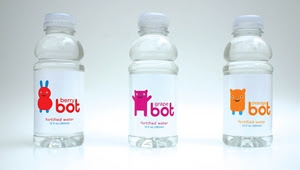 Given the recent beverage guidelines, such as the School Beverage Guidelines and the Guidelines for Adults, food and beverage manufacturers are trying to make healthier beverage options available. I just came across this interesting drink called Bot Flavored Water soon to be available in Whole Foods. It is made for kids as a healthier alternative to juice -- lower sugar (9 g vs over 20 g found in juice), nothing artificial, providing mostly water. I would prefer that kids just drink water and enjoy juice no more than two times a day, but for those who do not like water this may be a good option.
For Adults
By the way, I really liked the opinions shared in the following article (click here) on the New Beverage Guidelines -- read for yourself and tell us what you think.
For Kids (age 4 years and up)
-- in general no more than two 8-ounce 100% fruit juice beverages
-- and at least 2 cups of low fat or fat free milk.
Given the recent beverage guidelines, such as the School Beverage Guidelines and the Guidelines for Adults, food and beverage manufacturers are trying to make healthier beverage options available. I just came across this interesting drink called Bot Flavored Water soon to be available in Whole Foods. It is made for kids as a healthier alternative to juice -- lower sugar (9 g vs over 20 g found in juice), nothing artificial, providing mostly water. I would prefer that kids just drink water and enjoy juice no more than two times a day, but for those who do not like water this may be a good option.For Adults
--just drink water or flavor it with natural juices (or if you must a low cal powder like Crystal Light).
--Also make sure that you are getting your dairy, two glasses of skim milk, in addition to one cup of yogurt (a bowl of cereal can count as one glass of milk).
--Also make sure that you are getting your dairy, two glasses of skim milk, in addition to one cup of yogurt (a bowl of cereal can count as one glass of milk).
By the way, I really liked the opinions shared in the following article (click here) on the New Beverage Guidelines -- read for yourself and tell us what you think.
New product at The American Dietetic Assoc. meeting
I just came back from the American Dietetic Association Annual Conference in Philli, PA where over 10,000 dietitians from around the U.S. came together to hear the latest science in nutrition and health as well as see the new healthier products that are hitting the grocery store shelves. My favorite pick were the new PopTarts -- they taste great.
Whole wheat PopTarts -- it is about time. Kids and parents love PopTarts and they are so easy in the morning, the only problem is, they are unhealthy. I do not remember the ingredient list entirely as there were so many ingredient and nutrition facts panels that I reviewed while I was there (my head is still buzzing), but I believe they did not have high fructose corn syrup and that the fiber content was pretty good (I am waiting on Kellogg to answer my nutrition and ingredient questions about this new product, but they are slow). We will have to keep an eye out to make sure that the product is, indeed, healthier. According to the reps, the product should start hitting grocery store shelves now.
As soon as I get my notes together, I will share some additional product information and nutrition and health outcomes that were discussed during the scientific sessions.
Whole wheat PopTarts -- it is about time. Kids and parents love PopTarts and they are so easy in the morning, the only problem is, they are unhealthy. I do not remember the ingredient list entirely as there were so many ingredient and nutrition facts panels that I reviewed while I was there (my head is still buzzing), but I believe they did not have high fructose corn syrup and that the fiber content was pretty good (I am waiting on Kellogg to answer my nutrition and ingredient questions about this new product, but they are slow). We will have to keep an eye out to make sure that the product is, indeed, healthier. According to the reps, the product should start hitting grocery store shelves now.
As soon as I get my notes together, I will share some additional product information and nutrition and health outcomes that were discussed during the scientific sessions.
Subscribe to:
Posts (Atom)


